In this guide
Turn a promising course description into questions about prerequisites, assignments, timing, and a manageable week.
Separate the description from the decision
A course title can tell you what sounds interesting. It cannot tell you whether its work will fit beside your other commitments. Start with two questions: what academic purpose would this course serve, and what would a typical week require? Keep those questions separate. A course can be an excellent intellectual match and still create an impractical combination with the rest of your schedule.
Boston College’s University Catalog describes courses and identifies prerequisites and corequisites, while warning that listings can change. The Office of Student Services directs students to current Course Information and Schedule for term-specific details. Its public view is more limited than its authenticated view. Campus Taskbook has not inspected your record, degree audit, available seats, or restricted course materials.
Collect evidence before estimating time
Make a small planning note for each candidate course: exact course and section, term, credits, meetings, required companion components, and any prerequisite question. Mark uncertain entries with a question mark. Do not silently treat a missing detail as permission or assume that two sections have identical arrangements. Your advisor can help interpret how a course fits your particular program.
Next, look for a current syllabus through the official course information resources when one is available to you. BC says its detailed listings may include syllabus, textbook, and evaluation links; availability is not guaranteed. An older syllabus can generate questions, but label its term clearly. Assignment patterns, instructors, assessment formats, and required materials may have changed.
Estimate activities rather than difficulty
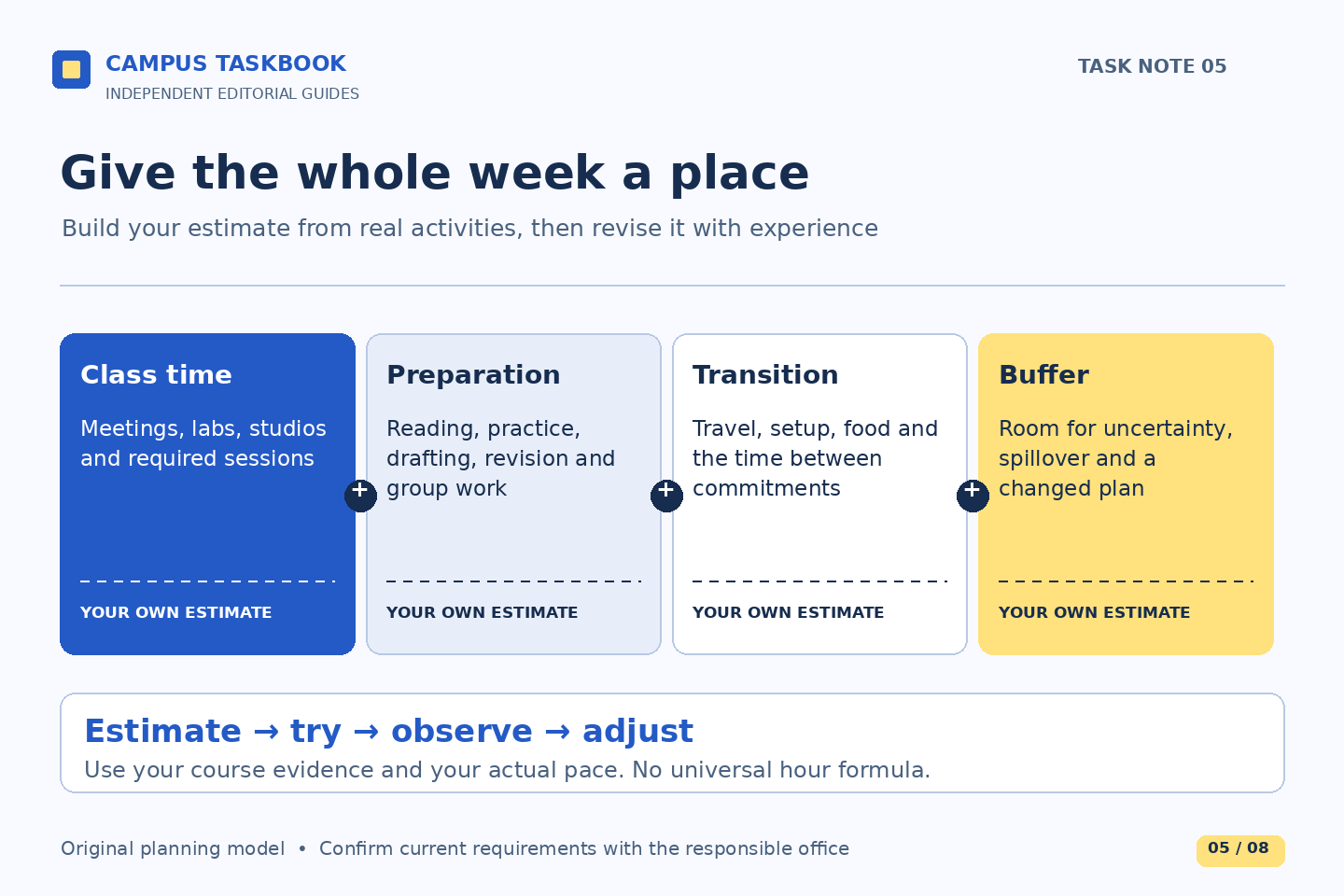
Convert available assignment information into activities: read and annotate, solve and check problems, prepare a lab, draft and revise, meet a group, or rehearse a presentation. Estimate your own time for each activity. A familiar subject may still demand sustained writing; an unfamiliar one may need extra preparation before class. A single label such as easy hides both possibilities.
Include the work surrounding class meetings. Travel, meals, employment, care responsibilities, and recovery time also occupy the week. Leave unassigned space for a task that takes longer than expected. The aim is a plan you can revise, not an impressive timetable with every gap filled. Credits matter academically, but do not supply a personalized time forecast.
Hypothetical example: two writing-heavy courses
Imagine choosing between two equally interesting electives alongside a required seminar. A current syllabus suggests that one elective has regular short responses and the other has a major research paper. Sketch the writing process for both. If the seminar already ends with a substantial paper, the second elective could concentrate several research and revision tasks in the same period.
That overlap does not automatically rule it out. It gives you a useful advising question: could you begin one research project earlier, choose a different section, or balance the remaining courses differently? This example is an original planning exercise, not a description of any actual BC course or a prediction of an instructor’s assignments.
Bring decisions, then revise the plan
For an advising conversation, bring a preferred combination, one alternative, and the unresolved questions that affect your choice. Distinguish a prerequisite question from a degree-requirement question and a workload concern. After classes begin, compare actual work with your estimate. If the mismatch persists, consult the instructor and advisor early and verify the relevant official change deadlines before acting.
The linked BC pages establish the official information sources. The workload method here is independent editorial guidance. It does not approve enrollment, establish degree credit, or replace school-specific policies. Recheck the official listing when making the final decision; a saved screenshot is evidence of what you saw, not a promise that the offering will remain unchanged.
Read next: Build a registration plan from different kinds of evidence, or A campus route needs more than a map pin.